

How Fanatics Took Over Trading Cards
Fanatics didn’t just “enter” the sports card hobby—it bought the keys to the whole building. From exclusive licenses with every major league to acquiring Topps and rebuilding the distribution chain, the company has spent the last few years turning a fragmented industry into something much closer to a vertically integrated empire.
Below is a collector‑level look at how we got here, what’s actually changed on the ground, and what it might mean for anyone who still cares more about cardboard than corporate decks.

How Fanatics went from merch giant to card “Cardfather”
Origins: merch, data, and direct‑to‑consumer
Fanatics started in e‑commerce and licensed sports apparel, building a business on three pillars: exclusive league deals, massive online reach, and heavy data use to target fans with whatever they were most likely to buy. By the late 2010s they were already handling online stores for MLB, the NBA, the NFL and many teams, quietly building relationships and data pipelines long before cards entered the conversation.
That playbook—lock up licenses, control distribution, and own the fan relationship—would get copy‑pasted straight onto trading cards.
The licensing bombshells (2021–2022)
In August 2021 collectors woke up to news that Fanatics had secured long‑term, exclusive trading card licenses with:
-
MLB and the MLBPA.
-
NBA and NBPA.
-
NFL and NFLPA.
These deals ran up to 20 years, dwarfing previous licensing contracts and effectively leapfrogging Topps and Panini, who had built those categories for decades. A Wall Street Journal report noted that the MLBPA’s deal alone was said to be “10 times larger” than any prior union card agreement.
At the same time, reports and later lawsuits said the leagues and players’ associations were given equity stakes in the new Fanatics card entity, tying their financial interests directly to Fanatics’ success.
For collectors, the message was clear: at some point in the mid‑2020s, Panini and Topps would lose their core sports, and Fanatics would be the only game in town for fully licensed MLB, NBA, and NFL cards.
Buying Topps and absorbing the old guard
The next move was almost inevitable. In January 2022 Fanatics acquired the Topps trading card business, including its sports & entertainment operations and global infrastructure.
-
That instantly gave Fanatics established brands like Topps Series 1, Bowman, Chrome, Stadium Club and more, along with factories, design teams and distribution relationships in 10+ countries.
-
It also solved a big optics problem: instead of killing Topps, Fanatics could position itself as the company that “saved” an iconic brand by folding it into Fanatics Collectibles.
Meanwhile, Panini—left without long‑term league licenses—sued Fanatics and the leagues, alleging anticompetitive conduct and “future monopoly” agreements. As those cases wind through court, the practical reality is still that Fanatics either has or will soon have the key licenses for MLB, NBA and NFL.
Rebuilding the distribution chain
Fanatics didn’t just grab the licenses; it started reshaping how cards move from printer to collector.
-
It cut long‑time distributors like GTS out of Topps allocations, signaling a move toward direct‑to‑consumer and direct‑to‑shop models.
-
It struck deals to put Topps displays into hundreds of Lids stores, expanding in‑person retail.
-
League officials openly praised Fanatics’ push into live breaks and “debut patch” programs, noting that leagues now receive a share of break revenue as a new income stream.
From Fanatics’ point of view, the goal is clear: control licensing, manufacturing, distribution and even parts of the resale/auction ecosystem, all under one data‑driven umbrella.
What Fanatics has done “right” so far (the collector positives)
Even plenty of Fanatics skeptics admit the company has brought some real improvements or at least promising ideas.
a) Stabilizing brands and long‑term planning
Because Fanatics owns Topps and has multi‑decade licenses, it can actually plan product lines years out instead of living contract‑to‑contract.
-
Flagship sets like Topps Series 1, Bowman and Chrome feel secure, which helps collectors think long term again.
-
The company has rolled out more coordinated cross‑sport designs and insert themes, leveraging its control of multiple leagues.
For collectors who hated constant license musical chairs, this is a genuine relief: your favorite baseball line probably isn’t disappearing because someone lost a bid.
b) More marketing and mainstream reach
Fanatics has done what smaller companies never could—plaster cards across mainstream channels.
-
They’ve pushed Topps and Bowman heavily through MLB marketing, ballpark promos, and online content, using league channels to tell card stories.
-
Their direct sites and email lists put new products in front of millions of casual fans who never walk into a hobby shop.
That broader funnel can help sustain the hobby’s size even if hardcore collectors get burned out on certain trends.
c) Some real product innovation
Not every idea is a home run, but Fanatics has tried things that previous card makers rarely pulled off:
-
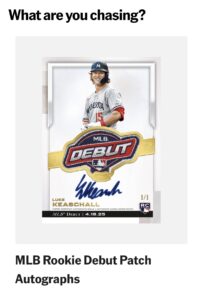
MLB “debut patch” cards with actual patches from a player’s first game, created in coordination with the leagues.
-
Tighter integration of live breaks and official product (Fanatics Live, “Breakers Row” type program), promising better transparency and a more “official” feel than random rogue breakers.
-
Early moves toward a single ecosystem where you can buy sealed product, join breaks, and resell singles in one place.
When done right, that makes the hobby easier to enter and more convenient to navigate, especially for new or casual collectors.
Screenshot
d) Data‑driven inventory and redemptions (at least in theory)
Fanatics execs argue that one of their core strengths is using data to print smarter and manage redemptions better than the old model.
-
Better demand forecasting could mean fewer massively over‑printed products and fewer shortages.
-
A modern tech stack should, in theory, make it easier to track redemptions and customer service issues, something collectors have begged for for years.
The verdict’s still out on how well they’ve executed, but the potential upside is real if they actually follow through.
The downsides and growing backlash
For a big chunk of the hobby, “Fanatics takeover” doesn’t sound exciting—it sounds like a warning.
a) De facto monopoly and lack of competition
Exclusive 10–20‑year deals with every major league effectively shut other manufacturers out of licensed MLB, NBA and NFL cards.
-
Collectors on forums and social media worry that with no real competition, Fanatics can raise prices, overprint, and cut corners while leagues and unions still get paid via their equity stakes and revenue share.
-
Lawsuits accuse Fanatics and the leagues of conspiring to build an unlawful monopoly that locks in Fanatics’ dominance and suppresses rivals for decades.
Fewer competitors historically means less innovation and fewer alternatives when a company makes decisions collectors hate.
b) Squeezing the middle of the hobby
Fanatics has been explicit about wanting to “own the supply chain” and sell more cards directly through its own channels and partner stores like Lids.
-
Hobby shop owners worry that direct‑to‑consumer drops and Fanatics‑controlled allocations will gradually starve local shops, or force them into whatever margin structure Fanatics dictates.
-
Long‑time distributors being cut out of Topps allocations was an early signal that the old ecosystem of regional wholesalers and shops is being re‑engineered from the top down.
If the only way to get wax at scale is “buy from Fanatics,” shops lose leverage and collectors lose alternative channels that kept pricing somewhat honest.
c) Break culture, loaded‑box allegations, and trust erosion
Fanatics has leaned heavily into breaks and “experience” marketing—and that has backfired in parts of the hobby.
-
2025 saw a wave of allegations that Fanatics employees steered “loaded” or cherry‑picked cases to favored breakers and influencers, giving them absurd hit rates on stream.
-
Articles and FTC complaints describe a culture where breaks feel like unregulated gambling: $70+ pack prices, “no‑lose” repacks, and vague odds.
-
Fanatics issued denials and cease‑and‑desist letters, but collectors are still left wondering whether the basic promise of a random sealed box is intact.
When the company printing and distributing the product also has financial ties to the biggest breakers and leagues, any hint of preferential treatment becomes a major trust issue.
d) Pricing, print runs, and the specter of a new junk‑wax era
Collectors have increasingly pointed to higher SRPs, more parallels, and massive grading volume as signs that we’re skipping toward a modern junk‑wax era under Fanatics.
-
One 2026 analysis noted over 26 million cards graded in 2025, up 32% year‑over‑year, as Fanatics and others pumped out product.
-
Complaints about products like 2025 Series 1 being “the worst value per box” many have ever seen revolve around huge print runs and watered‑down hits.
Even if Fanatics claims to be printing to demand, the sheer scale of their operation and their incentives to grow revenue make collectors nervous that long‑term scarcity is being sacrificed.
e) Legal and regulatory overhang
With antitrust lawsuits and FTC complaints in play, there’s always a non‑zero chance of regulatory intervention or forced changes.
-
That uncertainty can spook investors and complicate long‑term planning for both Fanatics and collectors who want to bet on sealed product or specific product lines.
What this could mean for collectors long‑term
From a collector’s vantage point, Fanatics’ takeover is a double‑edged sword: they’re big enough to keep the hobby alive and visible, but also big enough to bend it in directions we may not like.
a) Product landscape: fewer logos, more “ecosystems”
Barring major legal changes, the next decade looks like:
-
Fanatics/Topps controlling almost all fully licensed MLB, NBA, and NFL cardboard.
-
Rival companies making unlicensed or niche products (no logos, or secondary leagues) unless licensing rules change.
-
Increasing integration between primary sales, breaks, and secondary marketplace tools inside Fanatics’ own platforms.
If you like Topps and don’t mind a one‑stop ecosystem, that might be convenient. If you value diversity and competition, it’s a red flag.
b) Price and value: smarter to focus on singles and very selective sealed
Given the pricing trends and risk of overproduction, many seasoned collectors are already adjusting:
-
Leaning more heavily into singles of proven stars, key rookies and super‑short prints instead of ripping or hoarding every new release.
-
Being extremely selective about sealed “investments,” focusing only on true flagship products in historically strong years rather than assuming “all sealed wax goes up.”
Under a Fanatics‑dominated model, the safe assumption is that SRPs will stay high, and only a small percentage of products will age gracefully in sealed form.
c) Hobby shops vs. corporate retail
Local card shops probably won’t vanish, but their role will change.
-
Shops that thrive are likely to lean into community and services—grading help, trade nights, in‑person breaks, buying collections—rather than relying purely on wax margins.
-
If Fanatics pushes more direct sales and retail chains, LCS owners will have to negotiate allocations carefully and may carry fewer products at launch.
For collectors, that means the LCS you love might survive not as a cheap‑wax depot but as a community hub and singles marketplace.
d) Quality and innovation: depends on pressure from us
Whether Fanatics ultimately improves or harms product quality will depend heavily on how collectors respond.
-
If we keep buying watered‑down products at any price, there’s little reason for them to change.
-
Focused demand—rewarding sets with good checklists, print quality, and transparency, and ignoring the rest—can push even a near‑monopoly to prioritize certain standards.
In other words, we still vote with our wallets. A giant like Fanatics will follow the money; the question is whether that money chases quick‑flip breaks or long‑term quality.
How to collect smart in a Fanatics era
Speaking purely as a fellow collector thinking ahead:
-
Know which products actually matter. Flagship Topps/Bowman for baseball, whatever becomes the settled flagship lines for NBA and NFL once Fanatics fully takes over, and a small number of high‑end sets will likely be the long‑term pillars. Everything else is noise unless you personally love it.
-
Separate fandom from investment. Rip what you love and can afford to lose; treat “investing” as buying specific cards or very select sealed boxes, not random Fanatics drops.
-
Prioritize transparency. Support breakers and shops that clearly post odds, pricing, and allocation info, and be wary of anything that smells like insider access or “loaded” cases.
-
Stay informed. Follow legal and industry news around Fanatics; antitrust rulings, new licensing deals, and league decisions will shape product lines and scarcity more than ever.
Fanatics has already taken over the hobby’s infrastructure; we’re not voting on whether they’re in charge anymore. What we can influence is the kind of hobby we end up with—one that’s dominated by casino‑style breaks and bloated checklists, or one where a huge company is forced, by persistent collector pressure, to respect the history and long‑term health of cardboard.