



The Wild 2026 Sports Card Market
The Sports Card Market in 2026: Growth, Consolidation, and a Smarter Hobby
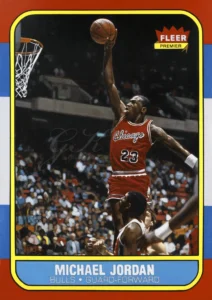
The sports card market in 2026 is active, liquid, and increasingly professional, but it is no longer running on the raw hype that defined the early pandemic boom. Instead, the market is being shaped by stronger infrastructure, better data, more disciplined buyers, and a major licensing shift that is changing how collectors think about brands, product calendars, and long-term value.
Just as important, the market is broad. High-end grails still command headlines, but the real story in 2026 is that sports cards now operate as a layered ecosystem. Vintage remains a stability anchor, modern and contemporary rookies still drive speculation, grading continues to influence liquidity, and online platforms keep deepening price discovery for everyone from casual buyers to full-time dealers.
A market that is still growing
By most measures, the sports card market in 2026 is larger than it was a year ago and much more mature than it was during the boom-and-bust stretch of 2020 through 2022. A Grand View Research report published in February 2026 estimated that the global sports trading cards market could reach $24.71 billion by 2033, growing at a 7.9% compound annual rate from 2026 forward. That same report said physical cards made up 66.1% of revenue in 2025, while autograph cards were projected to be the fastest-growing segment from 2026 to 2033.
Other market trackers point to a similar direction, even if their absolute dollar figures differ. Yahoo Finance coverage of a 2026 market-growth report said the collectible card market was projected to rise from $3.22 billion in 2025 to $3.54 billion in 2026, underscoring that the industry remains on an expansion path despite the cooler tone of the market compared with peak mania years. That gap between forecasts also reveals something important about the hobby in 2026: there is plenty of growth, but analysts do not always measure the market the same way, especially when they separate sports cards from broader trading card categories or include different geographies and channels.
This matters because many hobby participants still talk about the market as though it is either “booming” or “crashing.” In reality, 2026 looks more like a rebalanced expansion. Demand is not evenly distributed across every player, set, and format. Instead, money is concentrating around scarcity, trusted brands, elite athletes, iconic rookies, and cards with easy resale pathways.
eBay, platforms, and price discovery
If 2026 has a central marketplace, it is still eBay. Sports Illustrated reported that Card Ladder verified more than $421 million in sports card sales in August 2025 alone, the highest monthly volume on record since Card Ladder began tracking transactions in 2010. According to that report, eBay accounted for more than $300 million of that monthly total, far ahead of Fanatics Collect, Heritage Auctions, Goldin, and REA.
That dominance is not just a legacy effect. The sports card market in 2026 depends heavily on fast, transparent price discovery, and eBay remains the place where collectors, flippers, breakers, and shops can all transact at scale. A LinkedIn summary of eBay’s Q1 2026 earnings said trading cards generated $2.6 billion in eBay singles spend during 2025 and $233 million in a single month, while eBay identified trading cards as the top contributor to GMV growth in the quarter.
For the modern collector, that matters in three ways.
-
First, liquidity has become a category advantage. Cards that have consistent comp data and regular sales are easier to buy, price, and move.
-
Second, the platforms themselves shape demand. A player or insert that trends on eBay, Goldin, Fanatics Collect, or social video often sees faster price movement than a comparable card with weaker visibility.
-
Third, online sales data has made the hobby more efficient. Buyers can no longer lean as easily on vague claims of rarity or inflated asking prices when real transactions are easy to compare.
This efficiency helps serious participants, but it also compresses edges. In earlier eras, a collector could find undervalued cards simply because information moved slowly. In 2026, the market reacts faster. Breakout games, awards, injuries, call-ups, and playoff runs are reflected in card prices almost immediately because comps, content, and social chatter move in tandem.
The post-boom buyer is smarter
One of the clearest themes in 2026 is buyer discipline. CardVault by Tom Brady described the market as stronger, smarter, and more mainstream, arguing that the hobby has matured rather than stalled. That framing fits what many collectors see every day. Buyers are more selective about checklist quality, print runs, grading risk, and long-term player outlook.
The result is a hobby that punishes weak product and rewards conviction. Mass-produced modern base cards still struggle. Overhyped prospects can cool quickly. Sticker autos and vague memorabilia often underperform compared with cleaner, more premium formats. At the same time, truly scarce cards of major names remain resilient, especially when they combine eye appeal, brand recognition, and status within a player’s catalog.
This shift is why many collectors in 2026 divide the market into tiers instead of speaking about “sports cards” as one thing.
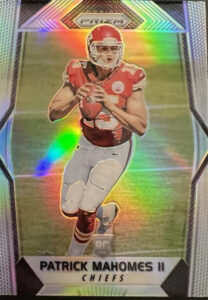
In practical terms, the average collector in 2026 is buying fewer random cards and more targeted ones. The hobby is still emotional, but it is increasingly filtered through a portfolio mindset, even among collectors who do not identify as investors.
The licensing shift is remaking the market
The biggest structural change in 2026 is the licensing transition centered on Fanatics and Topps. Athlon Sports reported that Panini’s long-standing NFL exclusivity ended on March 31, 2026, with Fanatics, through Topps, taking over officially licensed NFL card production starting in April. The same report noted that the Panini-Fanatics legal fight remains active, adding uncertainty around future product strategies and competition.
This shift matters far beyond logo placement. Licensing changes alter brand identity, product hierarchy, release sequencing, and perceived rookie card legitimacy. Collectors who spent a decade associating NFL chromium cards with Panini Prizm, Select, and Optic are now recalibrating around Topps Chrome Football and Topps Finest Football. Major Sports Cards argued in late 2025 that 2026 would mark Fanatics’ full takeover of major sports card licensing, with Topps moving into a dominant position across MLB, NFL, and NBA-style thinking about product development.
In some areas, the shift has created excitement. Card outlets and hobby media have framed the return of fully licensed Topps football as a major event because it reconnects current rookies to one of the hobby’s most nostalgic and trusted brand families. In other areas, the shift has created concern. Panini’s lawsuit alleges that Fanatics’ grip on league licenses could reduce competition and increase prices, a claim Fanatics disputes.
For collectors, the most important takeaway is simple: brand continuity is becoming a bigger driver of value. In a more consolidated environment, flagship brands can carry even more weight because they become the default entry point for each sport’s rookie class and key parallels.
Why autographs, patches, and scarcity still lead
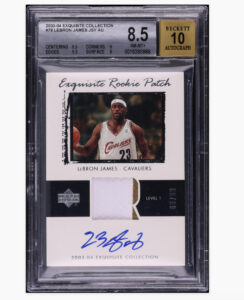
The premium end of the market remains driven by scarcity and story. Grand View Research projected autograph cards to be the fastest-growing segment from 2026 to 2033, which aligns with what collectors are actually chasing in the market. Rare autos, especially on-card signatures and cards tied to meaningful moments or game-used content, continue to outperform more generic modern cards.
This trend is visible across both modern and vintage-adjacent collecting. Sports Illustrated’s early-2026 vintage preview noted that rare, signed vintage cards continue to rise and that autographed cards play a major role in the modern market as well. At the same time, Cardboard Connection’s 2026 rookie-value analysis pointed to capital flowing toward scarce rookie purchases such as one-of-ones, true rookie autographs, low serial numbers under 25, and game-used patches with strong provenance.
That focus on provenance is critical. Not all memorabilia cards are treated equally anymore. A vague “not from any specific game or event” relic does not carry the same weight as a patch tied to a real game, debut, award event, or player milestone. As manufacturers try to improve checklist quality and storytelling, collectors are rewarding cards that feel anchored in something real.
This is part of a broader sorting mechanism in 2026. The market is no longer paying top dollar simply because a card is shiny, serial-numbered, or technically rare. Buyers want a card to clear several bars at once: star power, brand strength, visual appeal, scarcity, and a believable reason why it should matter five years from now.
Vintage as a stabilizer, modern as an accelerator
The sports card market in 2026 works best when vintage and modern are seen as complementary rather than competing lanes. Vintage remains the hobby’s stabilizer because it offers real historical scarcity, a finite supply, and a collector base that is less dependent on short-term player performance. Sports Illustrated’s 2026 vintage outlook suggested that while some modern cards could dip, rare and signed vintage material should remain strong.
Modern and contemporary cards, by contrast, are the accelerator. They create volume, daily content, rapid flips, and the majority of breakout speculation. Contemporary cards accounted for around 55% of the market in Grand View’s segmentation, while modern cards were projected to grow at the fastest rate among time-frame categories from 2026 to 2033.
That split creates an interesting dynamic.
-
Vintage attracts capital seeking durability, iconic players, and established historical importance.
-
Modern attracts buyers hunting upside, especially around rookies, low-numbered parallels, and premium autos.
-
Many of the strongest collections now blend both approaches, using vintage as a ballast and modern as a growth sleeve.
This also explains why the market can feel contradictory. A hobbyist might see weak prices on certain ultra-modern releases and conclude the market is down, while another collector focusing on elite vintage, top rookies, or key autos could reasonably say the market is healthy. In 2026, both can be right, depending on what part of the market they are watching.

Social media, breakers, and the content economy
The sports card market is now inseparable from content. Grand View Research cited social media and online marketplaces as major drivers of demand and trading activity. CardVault’s 2026 market overview also emphasized live breaks, mainstream exposure, and athlete-backed brands as part of the hobby’s resurgence.
This has created a feedback loop that did not exist at the same scale in earlier eras. A product gets previewed, ripped live, clipped on social platforms, discussed in Discord groups, and comped on eBay almost instantly. This speeds up both hype and correction.
Breakers remain central to that cycle. They have helped turn sealed wax into an entertainment product, not just a collectible one. For many buyers, joining a break is now less about maximizing expected value and more about combining access, adrenaline, and social participation. That can support sealed product prices, especially for flashy releases and strong rookie classes, but it can also create short-term distortions when excitement outruns long-term demand.
At the same time, content has broadened the market. Card shows are larger, athlete-backed shops and experiences are more visible, and newcomers can learn quickly because pricing tools, educational videos, and release guides are everywhere. The hobby is more public than it used to be, which raises participation but also increases the speed of consensus.
Grading still determines liquidity
Even with all the conversation around brands, licenses, and platforms, grading remains one of the biggest determinants of value in 2026. The card itself matters, but the condition-adjusted version of the card often matters more because graded examples create a cleaner market with narrower debates over centering, edges, and surface.
This is especially important in modern cards, where gem-rate expectations can be built into pricing. A raw card and a PSA 10 or BGS 9.5 equivalent may function like different assets entirely. As a result, buyers in 2026 are more attentive to print quality, factory lines, centering, and quality-control issues before they even buy the card.
Grading also intersects with market professionalism. More participants are calculating grading risk, turnaround time, and pop-report pressure as part of the purchase decision. That makes some cards more liquid than they appear on paper. A rare card with poor condition sensitivity may lag a less rare card that grades well and sells cleanly in a top holder.
This is another reason why the 2026 market feels smarter. Collectors are not just asking whether a card is rare. They are asking whether the card is easy to authenticate, easy to grade, easy to comp, and easy to sell. That distinction filters money toward the cleanest and most trusted parts of the market.
Category winners in 2026
Several clear winners are emerging in the 2026 sports card market.
Elite stars with global reach
Grand View said eBay trend data from December 2025 showed that names such as Michael Jordan, Shohei Ohtani, and Caitlin Clark continued to dominate interest and sales. These athletes sit at the intersection of performance, cultural visibility, and broad collector recognition, which gives their cards resilience beyond short-term hobby cycles.
Top rookies and early-career stars
Cardboard Connection’s rookie-value analysis suggested post-debut jumps of 30% to 50% are common for rookies, especially around strong media windows and major events. That does not apply to every player, but it shows why flagship rookies, low-numbered parallels, and true rookie autos remain central to the market’s speculative engine.
Scarce, premium formats
One-of-ones, low serial cards under 25, game-used patch autos, and strong on-card autos continue to absorb outsized demand because they concentrate rarity and narrative in one card. These formats also stand out better in a crowded market than basic numbered parallels or mass-produced inserts.
Well-run marketplaces and infrastructure players
The growth of eBay, Goldin, Fanatics Collect, and other structured selling environments shows that infrastructure is a winner too. As the hobby gets larger, trusted transaction rails become part of the value proposition.
Risks and pressure points
The market is healthy, but it is not risk-free. The main pressure points in 2026 are different from those of the pandemic bubble, but they still matter.
-
Overproduction remains a concern whenever a product family gets too broad or parallels become so numerous that true scarcity is harder to interpret.
-
Licensing concentration could reduce competitive pressure and potentially support higher box prices, a fear raised in coverage of the Fanatics-Panini dispute.
-
Performance volatility still drives modern pricing. A player’s hobby heat can cool fast after injuries, role changes, or unmet expectations.
-
Market access has improved, but that also means hype can get priced in earlier, leaving less room for easy wins.
None of these issues imply collapse. They simply reinforce that 2026 is not a market where everything works. Selectivity matters more than enthusiasm.
What the 2026 market really rewards
The strongest lesson from the current sports card market is that quality is beating noise. The market still loves excitement, but it pays most consistently for cards that combine five traits: real scarcity, recognizable brand, elite player quality, visual appeal, and strong liquidity.
That framework helps explain why the hobby looks stable in some places and overheated in others. It also explains why 2026 feels more sustainable than the boom years. The market is bigger, but it is also more filtered. Collectors are using data, grading standards, and platform comps to separate durable assets from temporary stories.
In that sense, 2026 may be one of the healthiest versions of the sports card market so far. It is not innocent, and it is not cheap, but it is increasingly knowable. That favors disciplined collectors, thoughtful dealers, and creators who understand not just what is hot, but why it is hot and how long that demand can actually last.