



Ohtani Card Prices in FREE FALL
We've spent a significant portion of 2026 talking about the incredible rise of Shohei Ohtani card prices, but over the last 30 days, we're continuing to see a very different story play out. What's particularly interesting to me is the continued decline in his more commonly available cards, including some of his most recognizable rookie cards.
According to HobbyCardIndex, which tracks 50 of Ohtani's most frequently traded cards, his overall card market has declined 13.2% over the last 30 days, including another 4.1% decline over the last week. That's across more than 5,000 recorded transactions representing approximately $1.6 million in sales.
These aren't necessarily isolated sales or a couple of bad auction results. We're seeing weakness across a number of different cards.
A look at the numbers
Here are some recent examples of the price declines we're seeing across Ohtani's more accessible cards, all in PSA 10 condition.
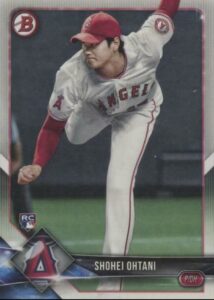
2018 Topps Chrome Rookie
$862
-10.2%
2018 Topps Update Rookie
$395
-7.3%
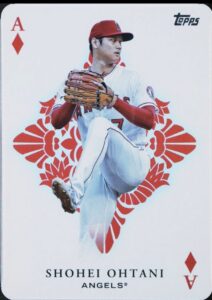
2018 Panini Diamond Kings #73
$144
-13.6%
2025 Topps Cosmic Chrome #56
$179
-9.1%
2026 Topps Stars of MLB
$65
-13.3%
2024 Topps Chrome Strokes
$81
-30.0%
30-day changes and reference prices from HobbyGM and CardWire. The platforms use different sales aggregation methodologies.
The player isn't the problem
One of the biggest misconceptions in the sports card hobby is that being right about a player automatically means you're going to be right about his card prices.
Ohtani could go down as the greatest baseball player of all time, and you could still lose a significant amount of money buying his cards. Those two things are not mutually exclusive.
At some point, we have to separate our enthusiasm for the athlete from the valuation of the collectible. How much future success was already baked into these prices? How much of the buying activity earlier this year was driven by genuine collectors versus people looking to make a quick return?
When everybody seemingly agrees that a particular player's cards are going to continue going up, I tend to become a little more cautious.
Screenshot
The supply conversation
This is where I think things get particularly interesting with Ohtani's more common cards. We're not necessarily talking about low-numbered rookie parallels, scarce autographs or historically significant grail cards. We're talking about cards that are readily available across multiple marketplaces.
As of November 18, PSA had already graded more than 15,000 copies of his 2018 Topps Update Rookie Debut #US285 in PSA 10 alone.
Cardboard Terminal
That's a lot of gem mint cardboard.
And while Ohtani has an enormous international collector base, there still needs to be sufficient buying demand to absorb the available supply at elevated prices.
When prices are climbing, collectors aren't necessarily in a hurry to sell. But when prices start falling, some of those same people may decide to take profits or cut their losses. Suddenly, buyers have more options and considerably more negotiating power.
Is it just the offseason?
Seasonality is certainly part of the conversation. Baseball cards cooling off during the winter months is nothing new, and we shouldn't automatically assume that these declines represent some catastrophic market collapse.
However, I'm not willing to dismiss everything as seasonality either.
Collector Nation reported that Ohtani's broader card market declined 8.8% in October and another 8% in November through November 26. Cards from 2025 and 2026 releases were down approximately 10% in November.
Collector Nation
Considering how aggressively some of these cards appreciated earlier in the year, we could also be witnessing a more substantial repricing of expectations.
There's no rule in the hobby that says a card that once sold for $1,000 has to eventually return to $1,000.
Is this a buying opportunity?
For collectors who have been priced out of Ohtani cards, I actually think some of these declines are a positive development. There are probably plenty of people who would love to own a nice Ohtani rookie card without having to explain to their spouse why the family vacation has suddenly been downgraded.
But just because a card is down 30% doesn't necessarily mean it's cheap. It might have been considerably overpriced to begin with.
Personally, I'd be looking at population reports, historical pricing, sales volume and the availability of alternative cards. I'd also be considering whether my money would be better spent on a more distinctive card rather than stretching my budget for a widely available PSA 10.
The nice thing about high-population cards is that you generally don't have to rush. Another copy will come along.
Ultimately, I don't think the Ohtani collecting market is going anywhere. His global appeal and historical significance are undeniable. Some of his cards could perform exceptionally well over the long term, while others could struggle to revisit their previous highs.
The question isn't whether Shohei Ohtani is special. We already know the answer to that.
The question is whether the particular piece of cardboard you're buying is special enough to justify the price you're paying for it.
And that's a conversation worth having across the entire sports card hobby.